Electrical fire and fault incidents in residential properties across the GCC spike every summer — and the reason is well understood by engineers, if not by most property owners. Air conditioning systems drawing peak load, combined with aging infrastructure in older buildings and the intense heat that accelerates insulation degradation, creates conditions where electrical hazards multiply quietly inside walls.
Saudi Arabia's building standards, governed by the Saudi Building Code (SBC), require compliance with specific electrical safety provisions. But compliance at construction is not the same as continued safety over years of use. Wiring degrades. Connections loosen. Panels age. Without periodic inspection, the gap between what was installed and what is safe grows invisibly.
The Specific Risks in Saudi Properties
- AC systems pulling 60–80% of a property's total electrical load create chronic stress on distribution boards
- PVC cable insulation degrades significantly faster in attic and wall cavities reaching 70°C+ in summer
- Loose terminal connections in junction boxes — common after years of thermal expansion and contraction — create arcing points
- Overloaded extension leads and multi-adapters are endemic in older villas not wired for modern appliance loads
- Earthing (grounding) systems in older properties are often inadequate by current standards
- Outdoor cable runs exposed to sun degrade faster than rated, particularly in areas without adequate conduit
Electrical faults are among the leading causes of residential fires in Saudi Arabia. Many originate in distribution boards, junction boxes, or AC unit wiring — locations that are only accessed during a professional inspection.
What Saudi Electrical Standards Require
The Saudi Building Code electrical provisions align closely with IEC standards and require properties to be inspected before occupancy. However, there is no mandatory periodic inspection regime for occupied residential properties — meaning the responsibility falls entirely on the owner.
For commercial properties and hospitality establishments, SASO and municipal regulations require more frequent compliance checks. Insurance providers in the Kingdom increasingly require documented electrical inspection records for coverage validation on commercial premises.
What an Annual Electrical Inspection Covers
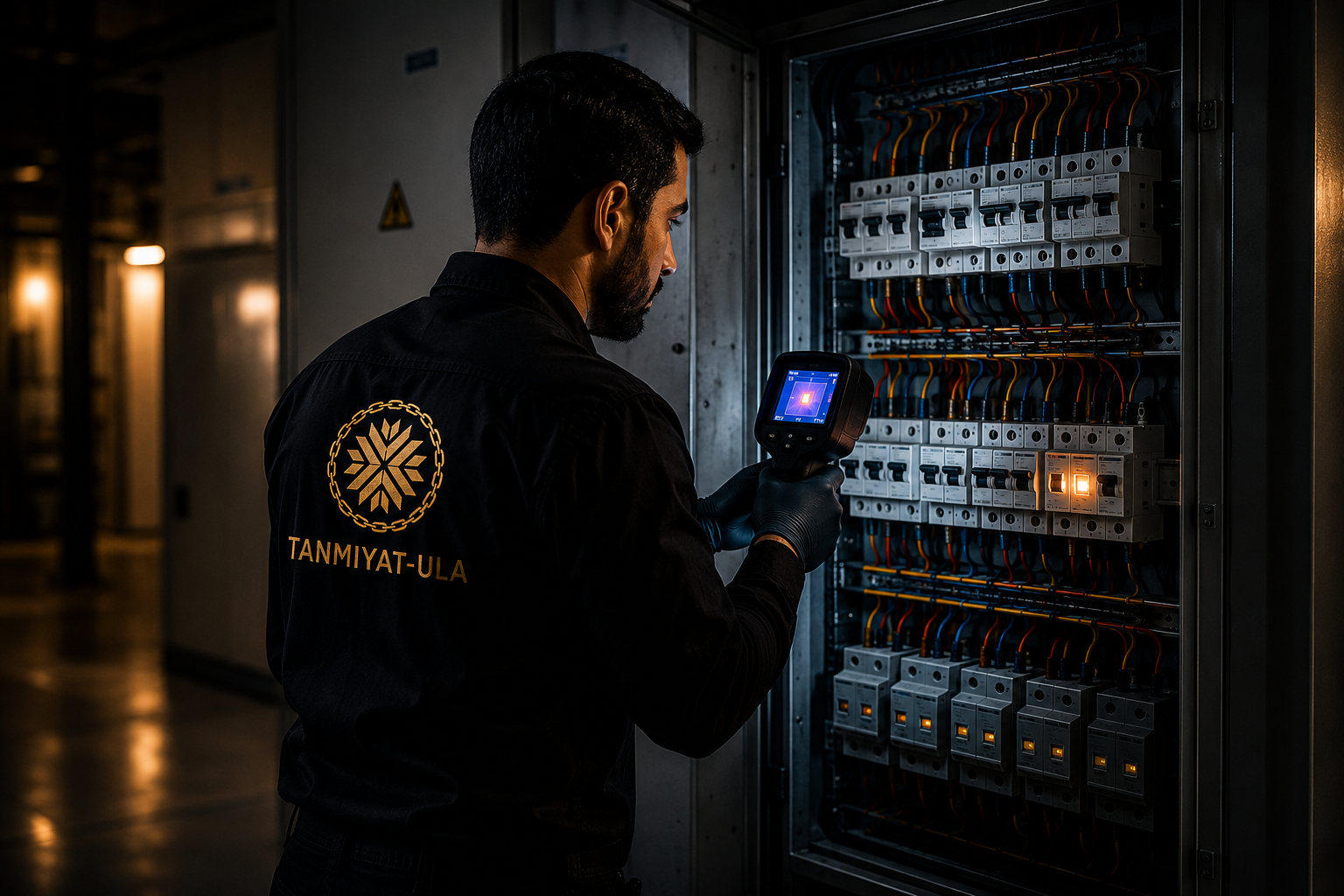
- Full distribution board inspection: breaker testing, terminal tightening, corrosion check
- Earth continuity and residual current device (RCD) testing throughout the property
- Socket and switch inspection for signs of overheating, damage, or incorrect loading
- Lighting circuit assessment including LED driver and fitting inspection
- AC circuit verification for correct breaker sizing and cable rating
- Outdoor electrical installation check: garden lighting, gate motors, external sockets
- Emergency lighting testing where applicable
- Written fault report with prioritised remediation recommendations
Warning Signs That Require Immediate Attention
While annual inspections are standard, certain symptoms indicate a fault that should not wait:
- Breakers tripping repeatedly without obvious cause
- Flickering or dimming lights when appliances start
- Burning smell — even brief or faint — from any electrical point
- Warm or discoloured switch plates or sockets
- Sparking when plugging in appliances
- Non-functioning earth leakage breakers
Why Qualified Technicians Are Non-Negotiable
Electrical work in Saudi Arabia must be performed by technicians qualified under the General Organization for Technical and Vocational Training (GOTEVOT) standards, or certified under equivalent international frameworks. Using unqualified labour for electrical work is not only dangerous — it may invalidate your property insurance and create liability in the event of an incident.
A maintenance subscription that includes annual electrical inspections by qualified technicians is the most cost-effective way to maintain both safety and compliance. The cost of an inspection is a fraction of the cost of a fault — and cannot be compared to the cost of a fire.