Saudi Arabia's climate — hot, arid, with mild winters — is highly hospitable to a range of pest species that can cause significant structural, health, and financial damage to properties. Yet pest control remains the most deferred maintenance category in residential property management across the Kingdom. The result is that property owners consistently discover infestations only when they are already severe.
The Pests Saudi Properties Face
Understanding the specific threats helps property owners prioritise correctly:
- Subterranean termites (النمل الأبيض): The most financially destructive pest in Saudi Arabia. They can destroy significant structural timber, furniture, door frames, and flooring over months before becoming visible. Riyadh's soil composition is particularly favourable to subterranean colonies.
- German and Oriental cockroaches: Both species thrive in Riyadh's conditions, particularly in kitchens, plumbing voids, and waste collection areas. They carry pathogens including Salmonella and E. coli and can contaminate food preparation surfaces.
- Rodents (rats and mice): Activity peaks in the cooler months (November–February) as rodents seek warmth inside buildings. They cause structural damage to cables, insulation, and soft furnishings, and carry significant disease risk.
- Sand flies and mosquitoes: Riyadh's irrigation infrastructure and garden landscaping creates breeding grounds, particularly in standing water. Pest control must include larval treatment of water features and drains.
- Stored product insects: Moths, weevils, and beetles that target food stores — a consistent problem in properties with large kitchens or pantry storage.
Subterranean termite colonies in Saudi Arabia can exceed one million insects and cause structural damage totalling tens of thousands of SAR before any visible surface evidence appears. By the time you see evidence — mud tubes, damaged wood, hollow-sounding structures — the infestation is already established.
Why Reactive Treatment Costs More
The economics of pest control favour prevention dramatically over reaction. A preventive treatment program covering a standard Riyadh villa costs a fraction of what reactive remediation requires:
- Established termite treatment: soil injection, baiting systems, and structural treatment can cost SAR 3,000–15,000+ depending on infestation severity and property size
- Rodent remediation including access point sealing and multi-visit programs: SAR 1,500–4,000
- Cockroach infestations in a large kitchen requiring gel baiting and residual spraying over multiple visits: SAR 800–2,500
- Preventive annual treatment covering all of the above proactively: SAR 800–2,000 for a standard villa
What a Professional Preventive Program Includes
- Pre-treatment site survey to identify evidence of existing activity and high-risk areas
- Perimeter soil treatment with approved termiticide for subterranean termite prevention
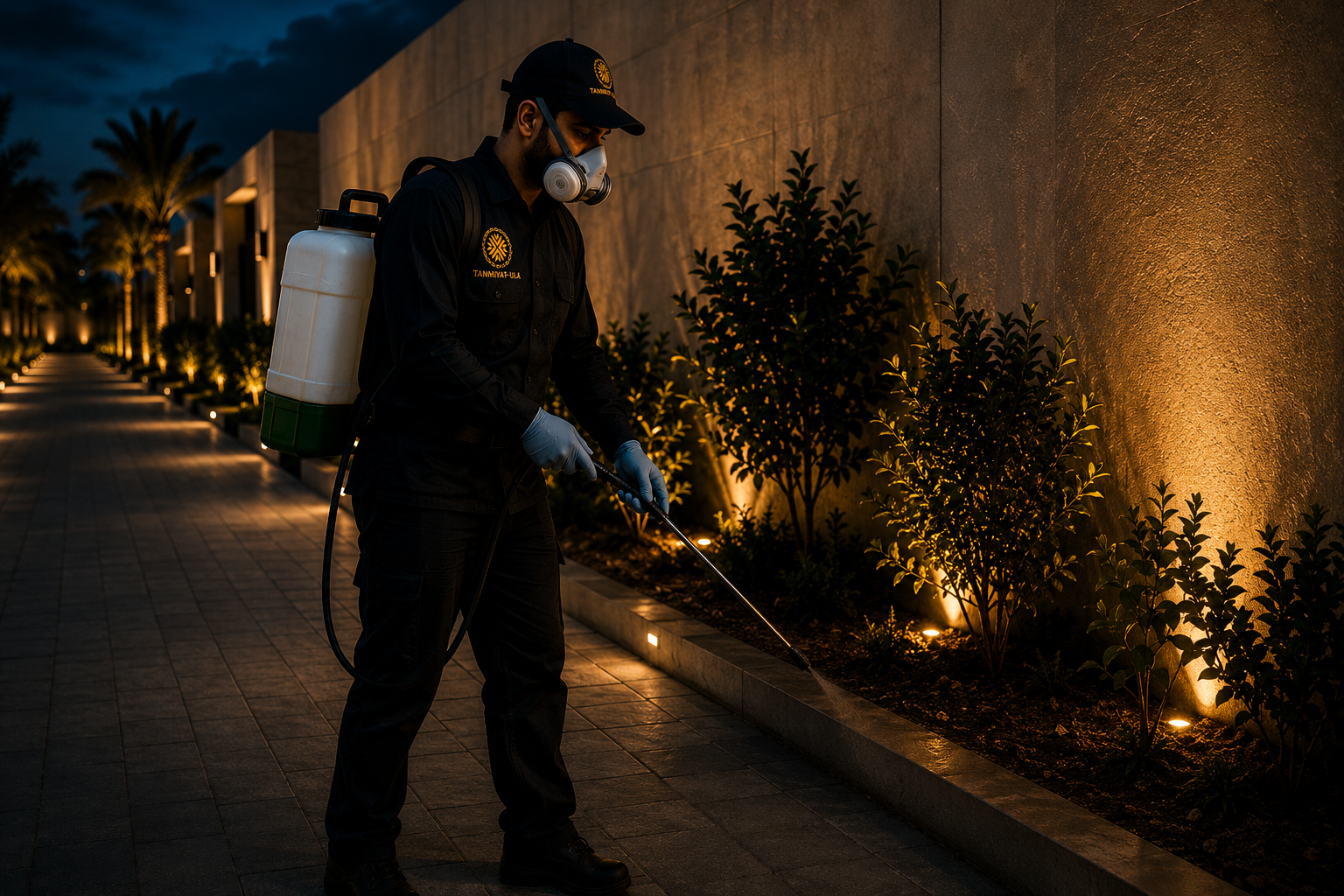
- Internal residual spraying of kitchens, bathrooms, and utility areas for cockroach and crawling insect control
- Rodent baiting stations placed in roof voids, perimeter, and internal high-risk areas
- Drain treatment for mosquito and fly larvae management
- Detailed visit report with photographic evidence of any findings
- Scheduled follow-up visits to monitor bait station activity and replenish treatments
How Often You Need Treatment
For most Riyadh properties, a professional preventive pest control program requires four visits per year — aligned with seasonal activity peaks. Spring (February–March) targets emerging insects before breeding season. Summer treatments manage mosquitoes and flies during peak activity. An autumn service covers rodent baiting before winter. A winter check reviews bait stations and treats for cockroaches, which move indoors in cooler months.
Properties with gardens, swimming pools, or adjacent to open land require more frequent attention. Commercial properties — particularly food service, hospitality, and healthcare — require monthly programs to meet regulatory standards and protect operating licences.
Choosing a Licensed Provider
In Saudi Arabia, pest control companies must hold a licence issued by the Ministry of Environment, Water and Agriculture (MEWA). Only licensed providers are permitted to purchase and apply restricted pesticides. When commissioning pest control, always verify the provider's MEWA licence and insist on material safety data sheets for all chemicals used — particularly for properties with children, elderly residents, or pets.