Riyadh recorded a peak temperature of 48°C in recent summers. For residents of the Kingdom, extreme heat is not an outlier — it is the norm for five months of the year. In this environment, air conditioning is not a luxury. It is life-critical infrastructure. Yet most property owners treat their AC systems as appliances that simply run until they stop.
That assumption is expensive. The gap between a well-maintained AC system and a neglected one can mean the difference between a SAR 250 service visit and a SAR 8,000 compressor replacement — or worse, a complete unit failure at 3am in July.
What Your AC System Actually Faces in Riyadh
AC systems in Riyadh operate under conditions that manufacturers in temperate climates did not design for. Beyond temperature extremes, Riyadh's environment presents:
- Chronic fine sand and dust that clog filters and evaporator coils within weeks
- Haboobs (sandstorms) that force dense particulate into outdoor condenser units
- Peak usage periods where systems run 18–22 hours per day continuously from May through September
- Hard water used in evaporative components that causes mineral scale on heat exchangers
- Extreme thermal cycling that stresses electrical connections and refrigerant lines
What Happens When You Skip Servicing
AC system failure does not happen suddenly. It degrades progressively, and each stage of neglect accelerates the next:
- Clogged filters force the system to work harder, increasing electricity consumption by 15–25%
- Dirty coils reduce heat exchange efficiency, causing the compressor to overheat
- Refrigerant levels drop through micro-leaks that go undetected without pressure gauges
- Drain lines back up and cause water damage to ceilings, walls, and finishes
- Condenser fan motors burn out early under accumulated dust load
Properly maintained HVAC systems in GCC climates consume up to 22% less electricity and last an average of 6 years longer than unmaintained equivalents. Against Riyadh's utility costs, the ROI on preventive maintenance is unambiguous.
What a Professional Quarterly Service Covers
A proper AC service visit is significantly more thorough than a filter change. A qualified quarterly PPM visit should cover:
- Deep cleaning of evaporator and condenser coils with approved solutions
- Filter replacement or cleaning depending on type and condition
- Refrigerant pressure check and top-up where required
- Drain line cleaning to prevent water back-up and ceiling damage
- Thermostat calibration and control board diagnostics
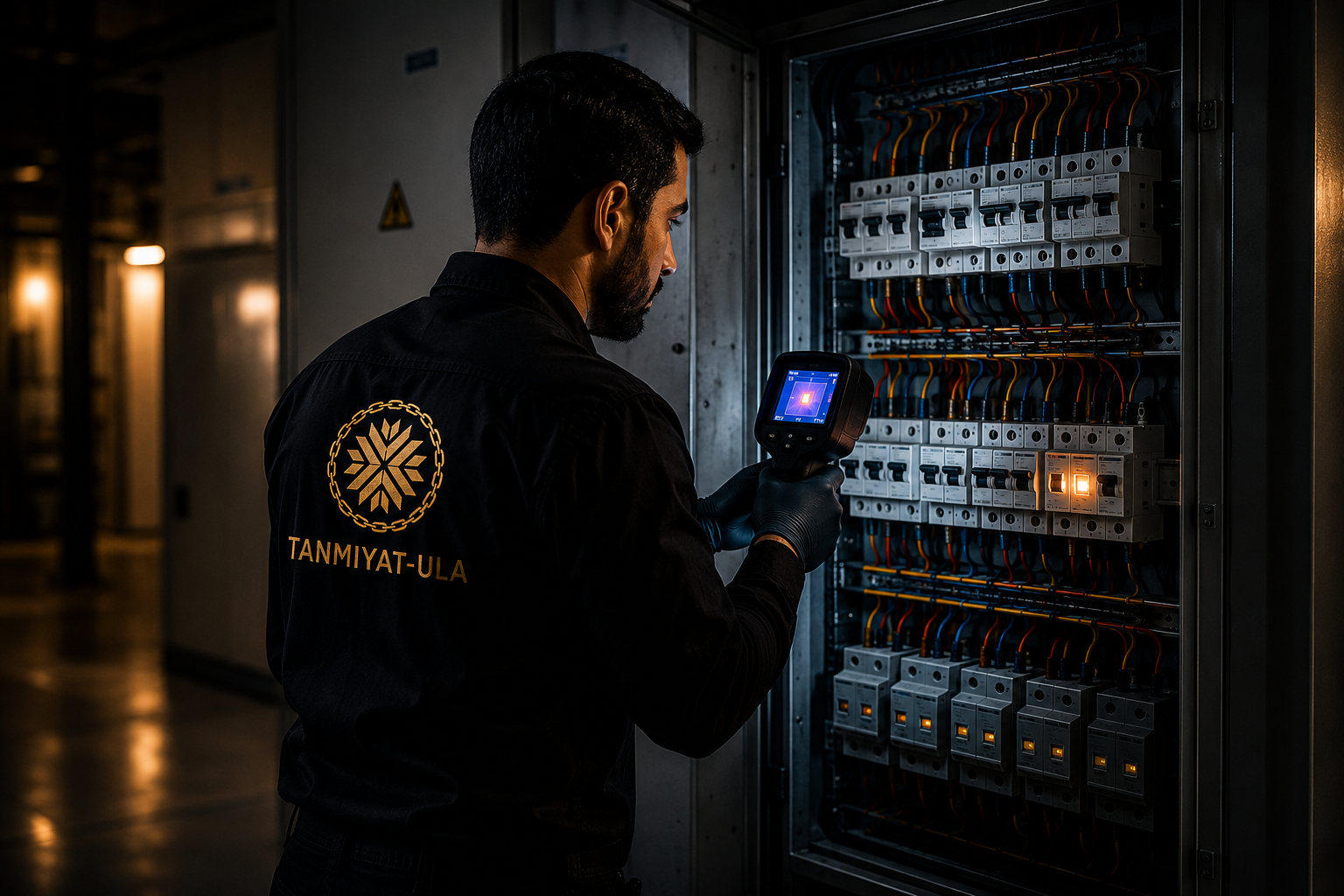
- Electrical connection checks for loose terminals and corrosion
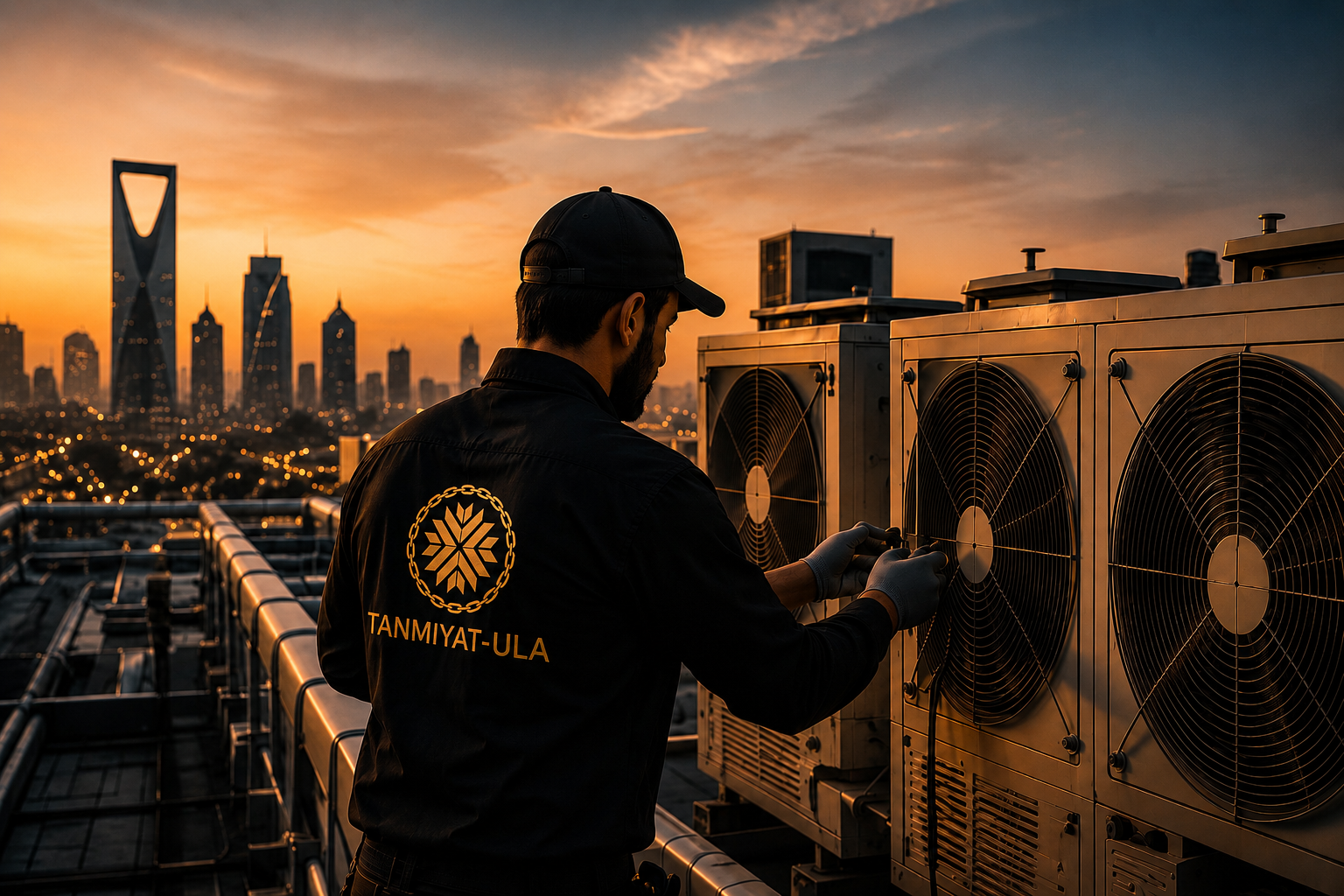
- Outdoor condenser unit inspection and fan cleaning
- Photographic inspection report delivered after every visit
The Financial Case
A typical villa in Riyadh has between 6 and 14 AC units. Replacing a single split unit costs between SAR 3,000 and SAR 12,000 depending on capacity and brand. A central system can cost SAR 40,000–120,000 to replace. Against these figures, a comprehensive annual maintenance contract is not a cost — it is asset protection.
For landlords and property managers, an AC failure that displaces tenants or causes health issues carries reputational and legal risk. For commercial properties, downtime from cooling failure has direct revenue impact. The math is simple: maintain consistently, or pay exponentially more when things break.
When to Schedule
The ideal time for a full AC service is March–April, before the peak season begins. A second service in September consolidates any wear from peak load. Emergency callouts during July and August carry long wait times as demand overwhelms service providers. A subscription maintenance plan gives you guaranteed priority scheduling before the rush — and far more predictable costs year-round.